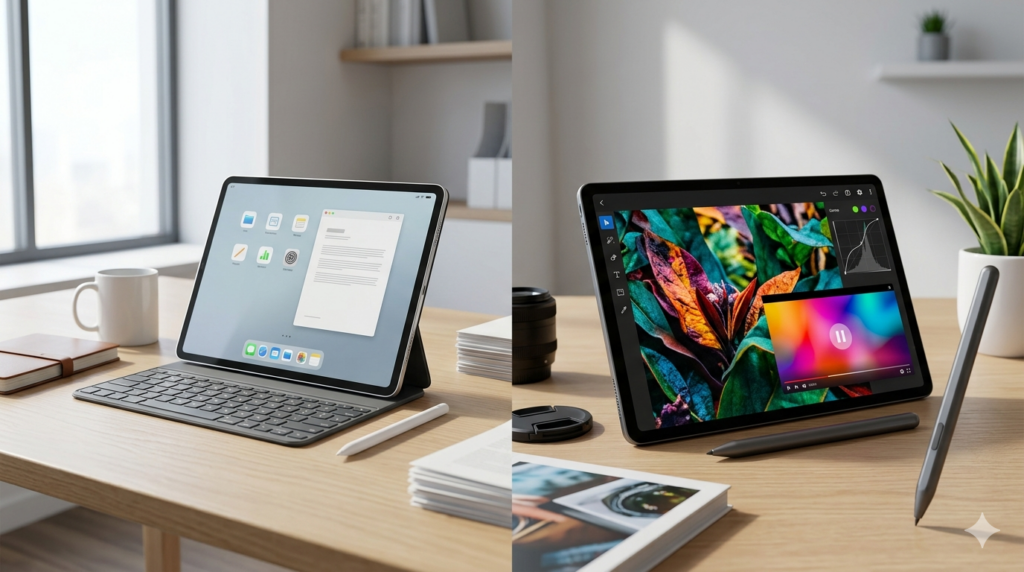
iPad Air M4 vs Galaxy Tab S11 | Balanced Apple tablet or flagship Android display-first pick
This comparison only becomes useful once the buyer stops thinking in generic “better tablet” terms and starts defining what premium actually means to them. One side is the balanced Apple main-tablet stop point. The other is the premium Android flagship that feels richer and more immediate for the right user.
Why these two premium tablets overlap at all
These two overlap because both can plausibly become a buyer’s real main tablet, not just a side screen for casual media. iPad Air M4 attracts people who want a strong long-term Apple tablet without paying all the way up for Pro. Galaxy Tab S11 attracts people who want flagship Android polish, Samsung familiarity, and a more premium-feeling multimedia experience inside that ecosystem.
That is why this comparison matters. It is not entry level versus premium. It is two different answers to the question of what a high-quality everyday tablet should feel like. One side leans on Apple continuity and balanced long-term value. The other leans on Android flagship character, bundled practicality, and a display experience many buyers will notice immediately.
Platform and workflow come before display quality
For Apple-heavy buyers, iPad Air M4 usually starts ahead because it fits their wider setup with less explanation. Shared services, accessory expectations, and cross-device habits all make the Air feel like a natural extension of the devices they already trust. In that situation, the case for Air is often made by routine comfort before the discussion even reaches panel quality.
Galaxy Tab S11 becomes stronger when the buyer’s phone, file habits, and daily comfort already point toward Samsung or Android. That buyer may care less about joining Apple’s logic and more about staying inside a workflow that already feels familiar. When workflow fit is clear, display quality becomes an amplifier, not the starting argument.
Display and motion matter differently to different buyers
This is one of the places where the choice can feel emotional because the screen is the part buyers touch and stare at most. Some people will genuinely notice richer contrast, motion feel, and a more obviously premium panel every day. For them, the display is not a spec sheet hobby. It is part of long-term satisfaction.
Other buyers simply want a stable, sharp, comfortable tablet that works well for notes, reading, browsing, and video without obsessing over panel class. Those buyers can easily overpay if they chase the more dramatic display story without being the kind of person who actually notices it often. The right answer depends on how visible that premium feel is to you in normal use.
Pen and accessory cost change the value story
Total value is wider than the shelf price. Buyers who expect note-taking, keyboard use, and long-term accessories need to think about how complete the purchase feels now and how expensive it becomes once the setup is finished. A tablet that looks cheaper at first can become less attractive if the buyer quickly needs multiple extras.
That is why this comparison is not settled by saying one side is cheaper or one side is more premium. The real question is which setup feels justified after the pen, keyboard expectations, and daily role are taken seriously. iPad Air M4 often wins by being the balanced Apple stop point. Galaxy Tab S11 often wins by feeling more complete and more immediately premium for Android-first buyers.
Which ownership style each tablet rewards
iPad Air M4 fits buyers who want one strong Apple tablet they can use for years without constantly wondering if they should have gone Pro. It is especially convincing for buyers whose workflow already lives inside Apple devices and who want a reliable main tablet for study, notes, work support, media, and a polished accessory path.
Galaxy Tab S11 fits buyers who want a premium Android tablet with stronger display appeal, Samsung familiarity, and a value story that feels easier to justify inside that ecosystem. It is a very logical choice for someone who wants their tablet to feel rich and capable right away without treating Apple integration as the default standard.
Who should step away from this pairing
Skip iPad Air M4 if the buyer already knows that display class, bundled practicality, or Android workflow flexibility matter more than Apple continuity. In that case, the Air can still look sensible on paper while feeling less exciting or less coherent once the buyer lives with it.
Skip Galaxy Tab S11 if the buyer is already strongly anchored to Apple devices and knows the tablet will constantly interact with that setup. Then the Tab’s strengths remain real, but they may not outweigh the friction of stepping outside the rest of the buyer’s ecosystem just to win on screen feel or Android preference.
The cleanest way to break the tie
Ask which kind of satisfaction you are actually buying. Are you paying for the smoothest Apple main-tablet experience before Pro pricing begins, or are you paying for a more obviously premium Android tablet experience that feels richer on day one? That framing usually makes the decision more honest than ranking specs in a vacuum.
It also helps to imagine your normal week rather than your first unboxing hour. Which tablet will feel better during notes, streaming, commuting, accessory use, and file handling after the novelty wears off? The one that fits those moments better is usually the right choice.
Which trade-off makes more sense in daily use
iPad Air M4 is the stronger long-term choice for buyers who want a well-judged Apple main tablet and already live in Apple logic. Galaxy Tab S11 is the more compelling premium Android choice for buyers who care about screen feel, Samsung familiarity, and a package that feels richer without pretending to be an iPad.
This is not really a contest between good and bad. It is a contest between two different versions of everyday satisfaction. The better buy is the one whose strengths still matter after a month of normal use.
Where buyers misread this premium choice
One common mistake is assuming that the more premium-looking screen automatically wins the comparison. Another is assuming the Apple option must be safer simply because Apple has stronger tablet mindshare. Both shortcuts miss the real issue, which is how the tablet fits the buyer’s actual routine and expectations.
Buyers also forget that balanced products often age well. iPad Air M4 can look less dramatic than a more visibly premium rival, but that does not make it the weaker purchase for the right person. Galaxy Tab S11 can look more exciting immediately, but that does not make it the better long-term fit for an Apple-heavy buyer. Context decides the meaning of the strengths.
The better main-tablet answer depends on which premium feels useful
If you already know your phone, files, and accessories pull you strongly toward one ecosystem, trust that signal. It is usually more predictive of satisfaction than one extra tier of display prestige or a slightly different value calculation.
This is less about raw quality and more about which premium direction feels right to live with. Air makes more sense for buyers who want Apple’s safest main-tablet stop point. Galaxy Tab S11 makes more sense for buyers who actively want Samsung’s flagship Android experience.
Related comparisons and guides