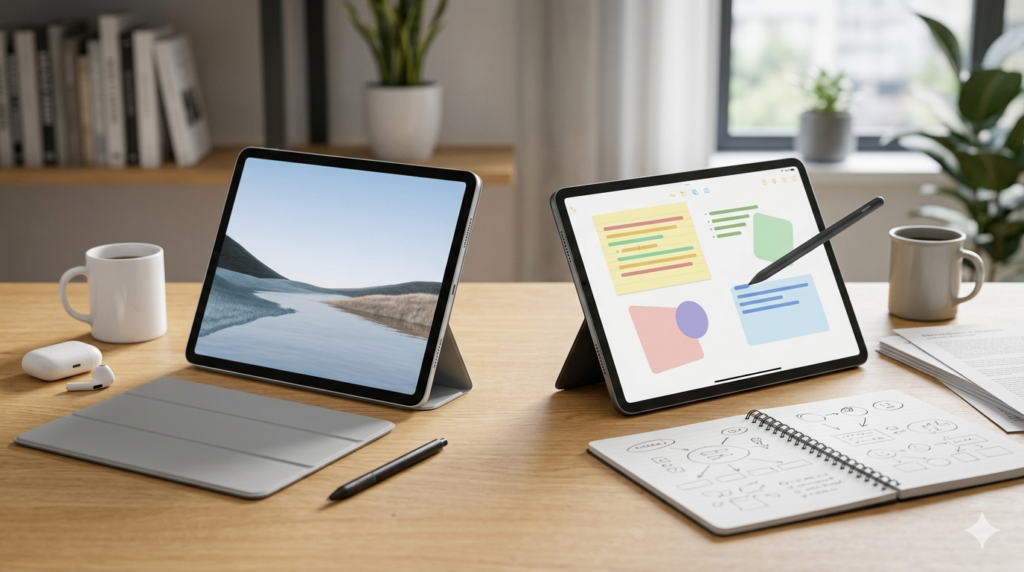
iPad A16 vs Galaxy Tab S10 FE | Entry Apple vs practical Android value
These two models overlap because both can look like sensible first-tablet choices, but they solve the purchase in very different ways. The real question is not which one sounds more impressive. It is which one fits your ecosystem, your note-taking habits, and your idea of good value with less friction.
Why these two end up on the same shortlist
These two overlap because they sit near the same practical question: how much tablet does a normal buyer really need before the price starts to feel heavy? iPad A16 attracts buyers who want the simplest Apple entry point that still feels legitimate for daily use. Galaxy Tab S10 FE attracts buyers who want a more complete Android value story with pen use and Samsung familiarity already in the picture.
That makes this comparison more interesting than a generic Apple-versus-Android debate. Both can work as sensible main tablets for light productivity, streaming, note-taking, and everyday browsing. The real split is not prestige. It is whether the buyer values Apple continuity more, or bundled practicality and Android comfort more.
The first fork is platform and ecosystem
If the buyer already uses iPhone, Mac, and Apple services heavily, iPad A16 gains an advantage before the hardware discussion gets deep. It slips more naturally into that environment, and that lower friction can matter more than a few missing extras. Buyers in that position usually feel the iPad’s value through routine smoothness rather than headline features.
Galaxy Tab S10 FE becomes stronger when the buyer already lives in Samsung or Android habits and does not want the tablet to pull them into a different logic. Shared familiarity, file movement, Samsung services, and a more Android-native workflow can make the Tab feel easier to own day after day. When ecosystem fit is already obvious, the rest of the comparison often becomes much shorter.
The second fork is pen logic and total up-front value
This is one of the clearest practical differences. Buyers who expect note-taking, class use, PDF markup, or sketching early often care about how complete the purchase feels on day one. In that context, Galaxy Tab S10 FE usually feels more straightforward because the value story is easier to understand and easier to budget for.
iPad A16 can still be the better buy, but usually for buyers who are already committed to Apple and are willing to build their accessory setup more intentionally. That means the iPad’s argument is less about a more generous box and more about long-term platform comfort. The better value depends on whether the buyer wants simplicity now or Apple continuity over time.
The third fork is how much display and premium feel actually matter
Not every buyer needs the same kind of tablet satisfaction. Some buyers mostly want a clean, dependable screen for reading, streaming, and everyday browsing. Others notice motion smoothness, pen feel, and general hardware richness much more often. The mistake is assuming those preferences are universal when they are actually personal and routine-driven.
That is why a premium-looking spec advantage can matter a lot to one buyer and very little to another. If the tablet will mostly handle light daily use, both products can feel perfectly reasonable. If the buyer is more sensitive to how the device feels as a study tool or long-term daily companion, the stronger fit often comes from workflow and feature balance rather than one isolated screen or chip talking point.
Which buyer naturally lands on each side
Buy iPad A16 if the buyer already lives in Apple devices, wants the cleanest Apple entry point, and does not mind building the accessory path with more intention. It makes the most sense for people who care less about the most complete box and more about buying the iPad that integrates smoothly into an Apple-heavy routine without climbing too high in price.
Buy Galaxy Tab S10 FE if handwriting, bundled practicality, Samsung familiarity, or broader Android flexibility are part of the point of the purchase. It is usually the better fit when the buyer wants the tablet to feel useful immediately for notes, PDFs, media, and general productivity without turning the decision into a more expensive Apple ecosystem commitment.
Who should move off this matchup
Skip iPad A16 if the buyer already knows they want a more complete note-taking package, broader file freedom, or a more Android-native experience. In that situation, the iPad can start to feel like the product that makes sense on paper but asks for extra adaptation later.
Skip Galaxy Tab S10 FE if the buyer is already deep in Apple devices and knows the tablet will constantly share files, accessories, and routines with that setup. In that case, Samsung’s value story can still be attractive, but the day-to-day logic may never feel as seamless as the iPad path.
The cleanest way to break the tie
Imagine the first month after purchase. Which tablet will handle your notes, streaming, basic work, files, and travel habits with less setup friction? That question usually exposes whether the buyer is chasing the more flattering spec story or the more natural ownership story.
It also helps to ask what would annoy you more: paying extra to stay inside Apple logic, or losing that Apple continuity in exchange for stronger bundled value. The answer to that discomfort question often decides this comparison faster than another round of technical reading.
Which buyer ends up happier after a month
iPad A16 is the cleaner stop point for buyers who already know they want an Apple tablet and simply want the most reasonable place to enter. Galaxy Tab S10 FE is the more persuasive value pick for buyers who want handwriting practicality, Samsung familiarity, and a tablet that feels complete more quickly.
Neither is the universal winner. The better buy is the one whose strengths will be felt repeatedly in your actual routine. In this matchup, platform fit and day-one value matter more than prestige.
Where buyers misread this matchup
Buyers often talk about these two as if they are trying to deliver the same kind of value. They are not. iPad A16 is mostly selling an Apple entry point that still feels credible long term. Galaxy Tab S10 FE is mostly selling a more immediately practical Android package. Once that difference is ignored, the comparison starts to feel muddier than it really is.
The other mistake is assuming that the better-known platform must automatically be the safer purchase. A safer purchase is the one that asks the buyer to compromise less often after checkout. Sometimes that is Apple. Sometimes it is the Samsung route with the more obvious pen-and-productivity story.
The better first-tablet answer depends on where your routine leans
Picture one normal school or work week. Which tablet fits your phone, your note-taking style, your media habits, and your file workflow more naturally? If the answer is immediate, you probably already have your winner.
This choice gets easier once the buyer stops asking which one is broadly better and starts asking which ownership style feels more natural. Apple continuity and low-friction entry favor the iPad. Pen value and Android flexibility favor the Tab S10 FE.
Related comparisons and guides