iPad 11-inch (A16) Review | Who It Still Makes Sense For in 2026
iPad 11-inch (A16) sits in a part of the tablet market where the buying decision is less about one benchmark number and more about what kind of buyer this device is really for. At $329, it is not enough for the product to look good on a spec card. The value needs to connect to a real routine, a real platform preference, and a real set of tradeoffs. That is why this review is not built around generic praise. It is built around fit.
Why the base iPad still stays on so many shortlists
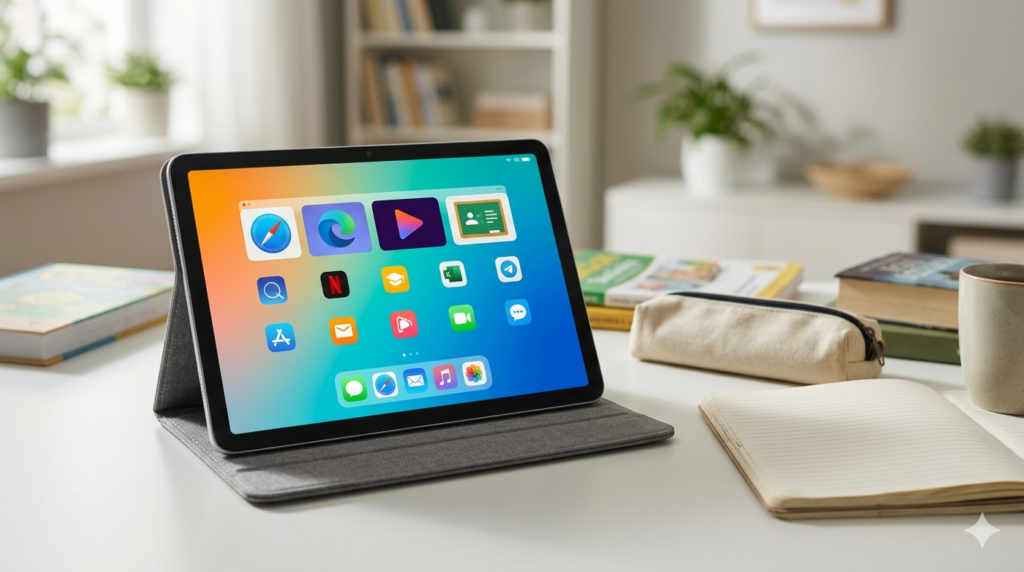
iPad 11-inch (A16) makes the most sense when you read it as the straightforward entry point into the current iPad lineup rather than a cut-down Air. The headline is not that it wins every spec comparison. The headline is that it gives buyers the familiar 11-inch iPad shape, a current A16 chip, a 2360-by-1640 display at 264 ppi, and access to Apple’s mainstream app ecosystem without immediately forcing them into midrange pricing.
That position matters because a lot of buyers start by asking whether they should stretch to the next model up. Sometimes they should. But the more useful question here is whether this model already covers the actual job. For web use, streaming, reading, class notes, light document work, and family use, its lineup role is coherent. It starts to look weak only when the buyer is quietly shopping for a more premium class while trying to stay in the cheapest one.
What keeps bringing buyers back to this model
Most buyers land here because the combination is easy to understand. They want an iPad-sized screen, they want Apple’s software and accessory path to feel familiar, and they do not want to pay Air money before they are sure they will use the extra headroom. In that sense, this is less of an impulse pick and more of a permission structure to stay practical.
It also gets clicks from buyers who are replacing an aging basic tablet and do not need a dramatic upgrade story. They simply want something that feels modern enough, lasts several years, and stays within a sensible budget. That is why this model keeps showing up in real shopping lists. It solves a common problem without pretending to be more ambitious than it is.
Where it feels easier to live with than expected
Its best quality is that it rarely feels confusing. The 11-inch size is comfortable for mixed use, Apple’s app ecosystem is still one of the easiest to live with, and the overall experience stays smooth enough for the kind of everyday routines that drive most tablet purchases. Watching, reading, browsing, taking simple notes, checking school materials, and handling light productivity all feel natural here.
There is also value in how little buyer remorse it creates for the right user. A product does not have to feel luxurious to feel well chosen. If you mainly want a dependable Apple tablet that does not push you into paying for higher-tier display tech or pro-facing extras, this model can feel cleaner and more honest than a more expensive choice you would only partly use.
Where the ceiling starts to feel close
The boundaries appear when the buyer’s expectations drift upward. Once you care a lot about a more premium display class, stronger multitasking comfort, Apple Intelligence support, or a better long-term accessory runway, this model starts to show its ceiling. None of those are small details if they already matter to your workflow. They are signals that you may actually be shopping for a different tier.
That is why this tablet can be either a smart buy or a slightly frustrating one. If you treat it like a clean everyday iPad, the limits are easy to accept. If you treat it like a cheaper way into an Air-style experience, the compromises start to feel louder over time. The mismatch usually comes from buyer ambition, not from a hidden flaw in the device itself.
Who ends up happiest with it
It fits first-time iPad buyers, students with light note-taking needs, families sharing one tablet, and casual users who mostly live in streaming, reading, email, browser tabs, and a handful of reliable apps. It is especially easy to recommend when the buyer is already comfortable with Apple devices and mainly wants the simplest path into a current iPad.
It also makes sense as a low-drama replacement purchase. If your last tablet was fine for years and you are not trying to turn the next one into a laptop substitute, the A16 iPad lands in a very sensible place. For that kind of user, the product’s restraint is part of the appeal.
Who should move on quickly
Buyers who already know they want Apple Intelligence, a laminated display, better long-term keyboard ambition, or a more premium feel should probably not stay here for too long. This is where “good enough” becomes expensive in the wrong way, because the cheaper purchase only delays the model you were actually going to want.
The same goes for people who expect their tablet to become a serious main device for years of heavy notes, document work, and multitasking. Those buyers are often happier admitting that earlier and comparing the Air immediately. The problem is not that this iPad fails. It is that it can succeed at the wrong job.
The question that simplifies the purchase
The clearest question is whether you want an Apple tablet that covers today’s routine cleanly or an Apple tablet that leaves more room for future ambition. The A16 iPad is strong in the first category. It becomes shakier in the second.
Asked that way, the decision usually gets easier fast. If your usage is already defined and modest, this can be the smart stopping point. If your hesitation keeps coming back to premium features, long-term headroom, or “maybe I should just buy better once,” then you are probably not the target buyer anymore.
What to compare next
The best next comparison is not random. Compare this model downward only if price is the whole story for you, and compare it upward if you keep circling around stronger displays, longer accessory runway, or more serious daily work. In practice, that usually means checking the nearest cheaper practical alternative and the iPad Air above it.
That comparison is useful because it shows whether you are buying for a present routine or for a future version of yourself. If the A16 iPad still looks complete after that check, it is probably the right purchase. If it looks like a compromise you are already explaining away, keep moving.
Who should actually buy the iPad 11-inch (A16)
iPad 11-inch (A16) is good when the buyer reads it correctly. It is not trying to be the cleverest spec bargain or the most premium tablet in Apple’s range. It is trying to be the cleanest mainstream iPad purchase for people whose routine is real, ordinary, and not secretly pro-level.
iPad 11-inch (A16) earns its place when the buyer wants a clean, low-drama entry into the iPad lineup rather than a pseudo-premium bargain. It is strongest for first-time iPad buyers and lighter routines, and much weaker when the goal is a more ambitious long-term main tablet.
Related reads