Base-model comparisons are rarely decided by headline specs alone. Once price and battery are in roughly the same range, the real differences show up in camera habits, ecosystem fit, file handling, comfort, and how the phone behaves in very normal daily use.
That is why the best question here is not ‘which one wins?’ It is ‘which one will create less friction over the next two years?’
Quick take
Pick Galaxy S26 if you value lighter feel, Android flexibility, file freedom, and more reach from the camera.
Pick iPhone 17 if you care more about Apple ecosystem fit, consistency, and a polished all-around base iPhone experience.
Battery probably will not decide this for most people
When two phones are close enough on endurance, battery stops being the clean separator. That shifts the decision toward the parts you notice more often: camera behavior, app flow, connected devices, and one-hand comfort.
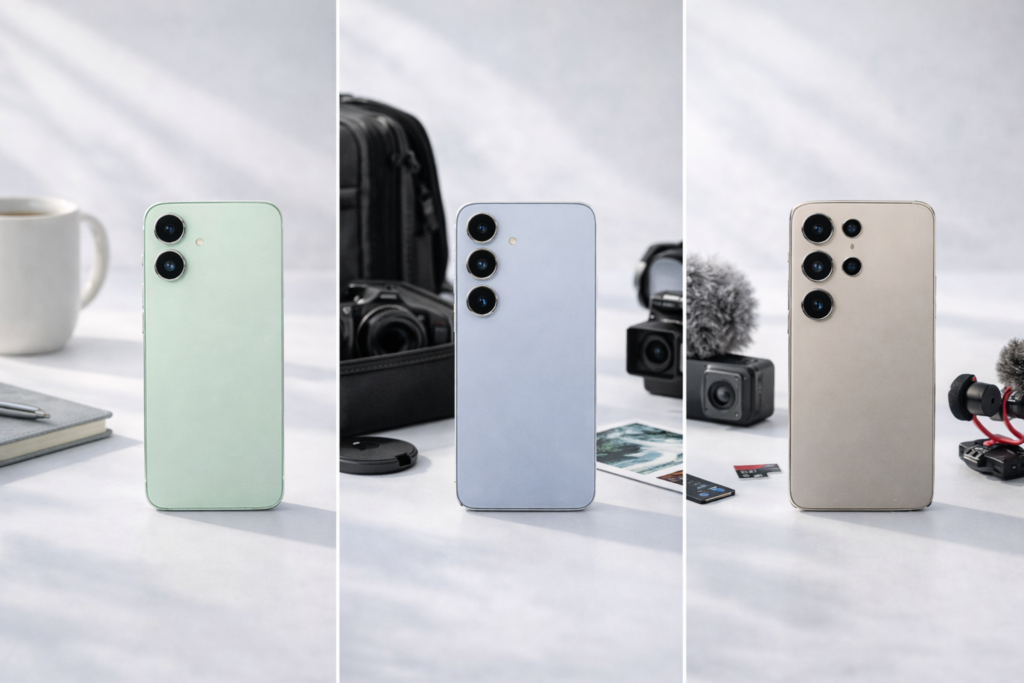
Camera use matters more than camera numbers
If you regularly zoom in at school events, travel spots, or concerts, the Galaxy side is usually more useful. If you care more about taking, editing, and sharing quickly inside a polished Apple workflow, the iPhone side is cleaner.
Ecosystem friction becomes a hidden cost
On paper it is easy to say that ecosystems should not matter. In practice they change the experience every day. A buyer already deep in Apple devices runs into less friction with iPhone. A buyer who values flexible file movement, multitasking freedom, and Android control will feel boxed in if they move the other direction.
Weight and handling matter more on base models
This size tier gets picked up constantly: commuting, messaging, scrolling, maps, quick photos. Small differences in balance and comfort add up. That is why the ‘daily feel’ argument is especially important in a base-model comparison.
Related reading
Practical checks before narrowing the shortlist
When reading Galaxy S26 vs iPhone 17: Which Base Model Fits Better Day to Day?, it helps to look beyond the model name and headline specs. This comparison is most useful when the product is judged against the buyer’s real routine, not as a generic ranking entry.
The main decision points are battery life, camera habits, and storage. Those factors change how the same product feels in daily use, especially when the buyer already owns devices or accessories that pull them toward one ecosystem.
Where regrets usually come from
Most regrets do not come from a product being bad. They come from paying for strengths that do not match the routine. Checking carrier plan and long-term value before buying makes it easier to separate a genuinely useful upgrade from a spec that only looks impressive on paper.
How to compare similar options
If two options look close, decide first what you can give up without frustration. That usually reveals whether the higher model is justified or whether the safer purchase is the simpler one that fits the actual use case.
Bottom line
Choose Galaxy S26 if you want the lighter-feeling, more flexible phone and you will actually use its camera reach. Choose iPhone 17 if you want the smoother Apple fit and a polished base model that asks for fewer compromises. If you lean iPhone but keep worrying about camera ambition, that is when iPhone 17 Pro becomes the next conversation.
What changes the value of Galaxy S26 vs iPhone 17
The battery factor is the second filter. When whether the phone still feels safe after navigation, video, camera use, and a long day away from a charger, a higher tier can make sense, but only if that benefit shows up often enough to justify the price difference.