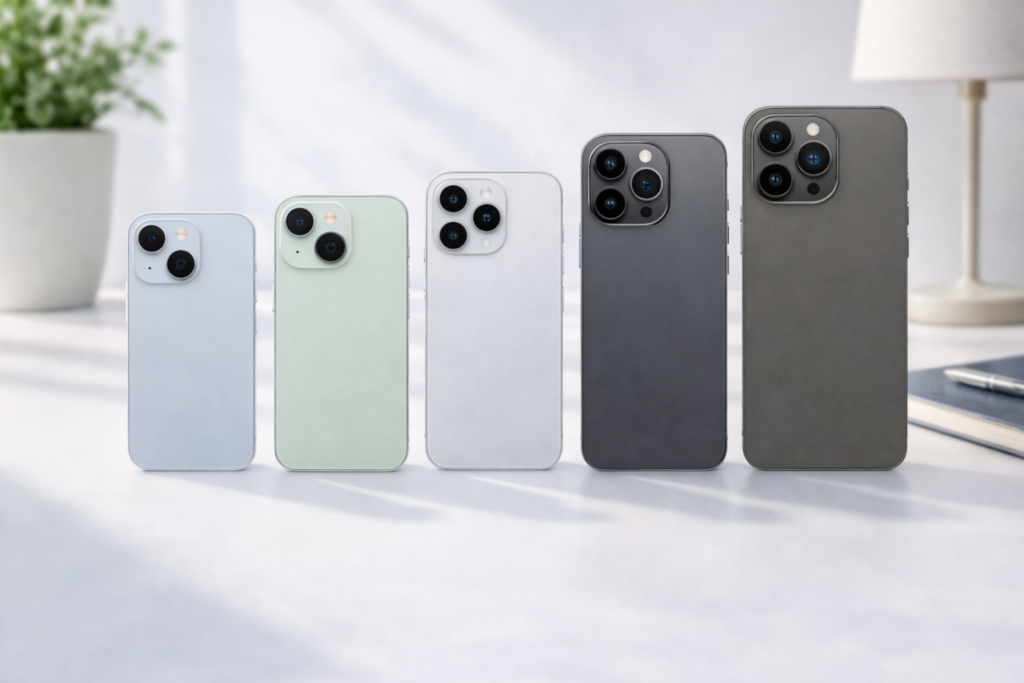
This is one of the trickiest comparisons in the lineup because the standard iPhone 17 is already good enough that many buyers can stop there without feeling shortchanged.
That also means the Pro has to justify itself more clearly. The right way to look at the price gap is not ‘is the Pro objectively better?’ It is ‘what do I actually do often enough that the extra money pays me back every week?’
Quick take
Choose iPhone 17 if you want a strong everyday iPhone and do not have a clear camera or performance-heavy reason to move up.
Choose iPhone 17 Pro if you care about zoom range, more serious photo and video use, and longer-term performance headroom.
The standard iPhone 17 is no longer the weak baseline
That matters because it changes the whole comparison. If the standard model is already polished, smooth, and complete for most buyers, the Pro is no longer the ‘safe’ default. It becomes the phone for people with a sharper reason.
The Pro earns its price mostly through camera and performance headroom
Battery differences are rarely the cleanest argument in this comparison. Camera flexibility and sustained performance are the stronger ones. If you care about zoom, shooting flexibility, editing headroom, or keeping your phone feeling overpowered for longer, the Pro starts to make more sense.
Camera ambition is usually the fastest way to separate the two
If you shoot concerts, kids’ events, travel details, low-light scenes, or anything where reach and flexibility matter, the Pro pays for itself more quickly. If your camera use is mostly daily snapshots, food, pets, and social sharing, the standard 17 is enough.
Long-term buyers may find the Pro easier to justify
For people who upgrade less often, the Pro reads less like overkill and more like insurance against future regret. The more demanding your routine becomes over two or three years, the more that extra performance margin matters.
Related reading
Practical checks before narrowing the shortlist
When reading iPhone 17 vs iPhone 17 Pro: What Does the Extra Money Actually Buy?, it helps to look beyond the model name and headline specs. This comparison is most useful when the product is judged against the buyer’s real routine, not as a generic ranking entry.
The main decision points are battery life, camera habits, and storage. Those factors change how the same product feels in daily use, especially when the buyer already owns devices or accessories that pull them toward one ecosystem.
Where regrets usually come from
Most regrets do not come from a product being bad. They come from paying for strengths that do not match the routine. Checking carrier plan and long-term value before buying makes it easier to separate a genuinely useful upgrade from a spec that only looks impressive on paper.
How to compare similar options
If two options look close, decide first what you can give up without frustration. That usually reveals whether the higher model is justified or whether the safer purchase is the simpler one that fits the actual use case.
Bottom line
The standard iPhone 17 is easier to recommend than base iPhones used to be. But if you are already the kind of buyer who worries about camera limits or wants more performance room, the Pro makes sense for reasons that are practical, not flashy.
What changes the value of iPhone 17 vs iPhone 17 Pro
The ecosystem factor is the second filter. When whether Apple, Galaxy, family sharing, accessories, and cloud habits make switching harder or easier, a higher tier can make sense, but only if that benefit shows up often enough to justify the price difference.