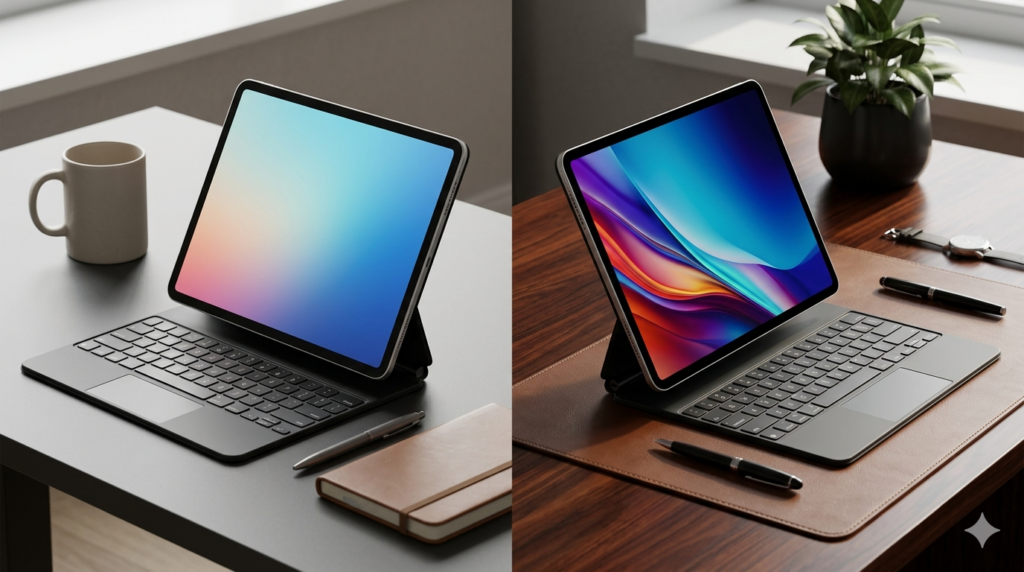
iPad Air M4 vs iPad Pro M5 | When the upgrade cost is actually justified
This is one of the most practical same-platform questions because both products are good, but only one of them may actually match the way the buyer uses an iPad. The real decision is whether you want the smartest long-term stop point or the iPad that removes every premium doubt.
Why Air and Pro overlap for so many Apple buyers
These two overlap because many buyers know they want an iPad, but do not yet know where the smart stopping point is. iPad Air M4 looks attractive because it promises a strong main-tablet experience without jumping straight to Pro pricing. iPad Pro M5 looks attractive because it removes almost every “what if I should have gone higher?” thought from the equation.
That makes this less about Apple versus another ecosystem and more about how much iPad the buyer will truly feel. Some people need the cleanest value point before the top tier. Others know they are the kind of user who will keep noticing the better screen, the extra polish, and the stronger long-term confidence. The right answer depends on how real that premium difference is in daily life.
The upgrade starts with the display
The first thing many buyers notice is the display tier. On paper that can sound like a luxury detail, but for people who read a lot, take notes for long periods, watch plenty of video, or simply care about how premium a device feels in hand, the display is not minor. It is one of the most repeated parts of the ownership experience.
At the same time, not every buyer experiences that premium jump equally. Some buyers will appreciate it for a day and then stop noticing. Others will feel it every single time they unlock the tablet. The question is not whether the display upgrade is real. It is whether it will remain real for you after the honeymoon period ends.
Storage floor and hardware extras matter more than raw speed
Many buyers over-focus on chip labels because they are easy to compare. In practice, storage floor, hardware refinements, and the overall premium package often shape long-term satisfaction more than another round of speed talk. Buyers at this level are usually not struggling because their tablet is “too slow.” They are deciding how much top-tier confidence they want built into the device.
That is why the Air can still be the smarter buy even when the Pro is more impressive. If the buyer wants a strong, long-lasting iPad without paying for every last premium extra, Air often lands in the better place. If the buyer wants the version that leaves fewer lingering upgrade thoughts, Pro starts to justify its higher ceiling.
Why many buyers overestimate what they need
Shoppers often imagine their most demanding possible use case and buy for that fantasy instead of their normal week. That is how many sensible Air buyers talk themselves into Pro pricing. They can picture occasional advanced use, but their real routine is still notes, reading, media, browsing, and moderate work support. For that pattern, the Air can already feel deeply satisfying.
The Pro becomes easier to justify when the buyer genuinely values premium screen feel, higher-end hardware confidence, and the psychological comfort of buying the top iPad once and being done with it. The danger is not buying Pro. The danger is buying Pro for an imagined self while living like an Air buyer most of the time.
Who should stay at Air and who should climb to Pro
Stop at Air if you want one strong iPad that can handle notes, media, study, work support, and long-term everyday use without making you feel like you cut too far down. Air is the right answer for many buyers because it gets to the heart of the iPad experience without dragging every premium extra into the budget.
Move to Pro if you already know that the display tier, hardware refinement, and long-term ceiling are not abstract luxuries for you. Pro makes sense for buyers who will notice those differences often, use the tablet heavily, and dislike the feeling of leaving the best version of the product on the table.
Who should stop pretending both make equal sense
Skip Air if you know yourself well enough to predict that you will keep comparing upward after purchase. If the best screen, the most complete hardware package, and the top-tier iPad identity matter a lot to your satisfaction, buying Air can turn into a temporary stop rather than a confident one.
Skip Pro if your routine is already pointing toward balanced, practical use and you do not usually chase top-tier hardware for its own sake. In that case, Pro can stay impressive while still being harder to justify than the Air that would have covered your real life extremely well.
The cleanest way to break the tie
Ask yourself whether you are buying the smartest iPad for daily life or the iPad that removes every premium doubt. Both are valid goals, but they are not the same goal. Air usually wins the first one. Pro usually wins the second.
It also helps to imagine six months of use, not launch-day excitement. Which feeling would bother you more: spending more than necessary, or wondering whether you should have gone all the way to Pro? That discomfort test often reveals the real answer faster than another spec chart.
Who really benefits from moving from Air to Pro
iPad Air M4 is the stronger stopping point for many buyers because it delivers a serious, long-term iPad experience without crossing into full Pro pricing. iPad Pro M5 is the better answer for buyers who know they will keep noticing the display, the polish, and the higher ceiling for years.
This comparison is not about whether Pro is better in absolute terms. It is about whether the buyer will truly live at a level where that extra better keeps mattering. If yes, Pro is easy to defend. If not, Air remains the more disciplined and often smarter buy.
Where buyers overread the Pro jump
The biggest mistake is assuming that because Pro is better, it must also be the better purchase. Better hardware and better value are not the same thing. Air often wins because it stops in the exact place where quality is already high and regret stays low.
The second mistake is treating Air like a compromise product. For the right buyer, it is not a compromise at all. It is the model that captures most of what makes iPad good without forcing the buyer to pay for every premium layer Apple can offer.
The smarter stopping point depends on whether Pro benefits stay visible
Think about how often you will truly notice the better screen, the richer hardware feel, and the higher-end identity of the Pro. If the answer is “almost every day,” Pro probably makes sense.
Most buyers do not need the Pro to feel satisfied, which is exactly why Air remains such an important stopping point. Move to Pro only when the extra display class, storage floor, and premium hardware change the ownership story in a way you will keep noticing.
Related comparisons and guides