A robot vacuum can look excellent on paper and still feel wrong in a real home if mopping is weak, obstacle handling is unreliable, or the machine is simply too annoying to run while people are around. Those details often decide whether the robot becomes part of the routine or part of the problem.
This guide is about those everyday deal-breakers. They are less glamorous than suction numbers, but they are often what separates a robot you actually use from one you quietly stop trusting.
When mopping really changes the recommendation
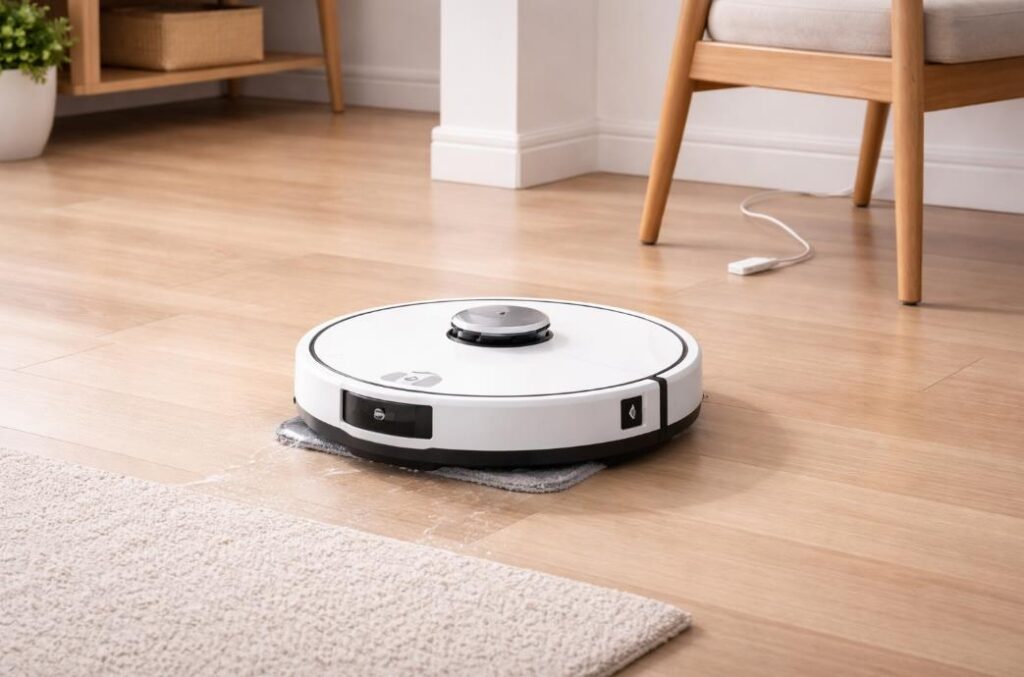
Mopping matters most in kitchens, dining zones, entry areas, and homes where sticky residue shows up more often than loose dust. In those spaces, the mop system and the dock cleaning routine matter because they decide whether the robot actually reduces your labor or just spreads it around differently.
If your floors are mostly carpet or you rarely care about dried-on marks, do not overpay for the most dramatic mopping story.
Why obstacle handling changes everything
Obstacle handling is the difference between a robot that runs while you are out and one that feels like it still needs a chaperone. Homes with charging cables, toy clutter, dining chairs, pet bowls, or random soft items on the floor benefit from better object detection more than they benefit from another giant suction claim.
The less tidy your floor is between cleanups, the more obstacle handling should move up your priority list.
Noise is not a minor detail
Noise matters when the robot runs while you work from home, when kids nap, or when the dock empties during the evening and suddenly dominates the room. Many buyers focus on cleaning power first and only later realize that a loud dock routine changes when they are willing to use the robot.
A quieter ownership experience can be worth more than a slightly bigger headline spec if it keeps the machine running on the schedule you actually need.
The easiest way to set priorities
- Mop-first home: check station care and daily wet-cleaning practicality first.
- Cluttered home: check obstacle handling and rescue frequency first.
- Quiet-home schedule: check body noise and dock noise before extra convenience features.
- Mixed home: pick the one issue that would annoy you the most every week.
It is easy to overvalue one cleaning mode and underestimate everyday interruption. A robot with strong mopping but weak clutter handling, or one that cleans well but is annoying to run at home, can still become a poor real-life fit.
The common mistake
The mistake is treating mopping, obstacle handling, and noise as bonus features. In many homes, one of them is the reason the robot succeeds or fails.
If one of those three keeps interrupting your current routine, give it more weight than a broader but less relevant feature stack.
Bottom line
The right robot is not just the one that cleans well on paper. It is the one whose weak point does not collide with the way your home actually works.
Related reading
Browse the full model lineup, quick buying guides, and detailed comparisons in one place.