
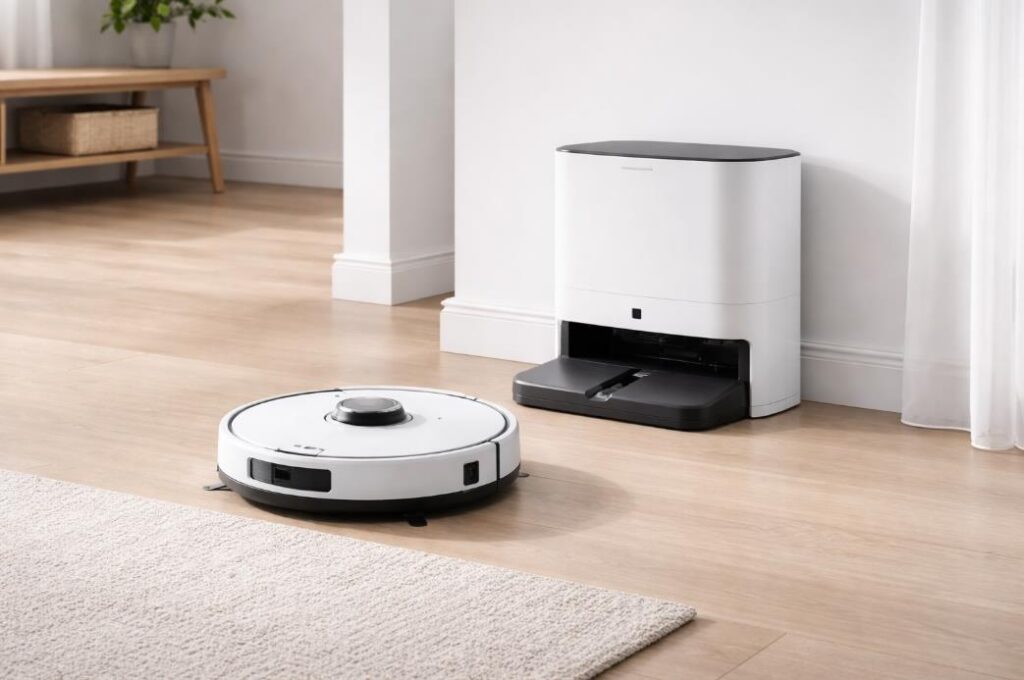
Most robot-vacuum buying mistakes happen before anyone compares models. The trouble usually starts when people shop by brand name, discount, or one oversized suction number instead of asking what their home actually punishes every week.
A better approach is to treat the process like a filter. Thresholds, rugs, pet hair, low furniture, and dock upkeep each narrow the field in a different way. Once you identify the friction your home creates most often, the shortlist gets much smaller and much smarter.
Start with the room, not the brand
If your home has repeated thresholds, rugs, low furniture, pet hair, or daily clutter, those conditions will shape your experience more than a suction figure on the box. A robot that looks impressive on paper can still feel annoying if it keeps getting stuck, skips areas you care about, or asks for more dock maintenance than you expected.
That is why the smartest first step is not to compare everything at once. It is to identify the one or two conditions that most often create friction in your home.
The four questions that cut through the noise fastest
- Do you need the robot to clear thresholds, sliding-door rails, or uneven room entries on its own?
- Will it spend meaningful time under beds, sectionals, or cabinets where a taller robot simply cannot reach?
- Is pet hair the mess you fight most often, or is mopping and edge cleanup the bigger headache?
- Do you want the dock to remove as much routine labor as possible, or are you fine doing part of that maintenance yourself?
The first answer usually matters more than the other three. A home with repeated transitions should be filtered differently from a pet-heavy apartment or a low-clearance condo.
Protect the feature your home exposes
Protect the feature that solves the problem your home creates every week. If the robot gets stranded on transitions, threshold performance is not optional. If dust under furniture keeps surviving every run, body height is not a small detail. If pet hair keeps wrapping around the brush, anti-tangle design matters more than a flashy dock line.
Compromise on the features that sound impressive but do not really change your routine. Many buyers overpay for a premium story when what they actually needed was the right shape, the right brush design, or a calmer maintenance burden.
How home type changes the shortlist
- Threshold-heavy homes should look at crossing ability and route stability before app extras.
- Carpet-heavy homes should look at carpet strategy and mop behavior before headline mopping claims.
- Pet homes should look at hair management, contamination handling, and avoidance before raw suction alone.
- Small homes should think seriously about noise, maintenance burden, and how often the robot will really run.
How to use the hub without wasting time
The most practical order is usually layout first, then carpets, then obstacle avoidance, then maintenance automation, and only after that the smaller convenience features. Once you have narrowed the shortlist to two or three models, reviews become much easier to trust.
Without that first filter, almost every premium robot vacuum starts to sound attractive in roughly the same way.
Most shoppers spend too long comparing feature stacks before deciding what kind of home they actually have. That usually leads to paying for the wrong strength and then wondering why the robot still feels annoying in use.
The easy mistake
The most common mistake is treating all premium robots like they are chasing the same job. They are not. One may be built around slim-body access, another around thresholds, another around pet-hair convenience, and another around full-package flagship polish.
If you sort by home friction first and specifications second, you avoid most expensive mistakes before they happen.
Bottom line
The best robot vacuum is usually the one that solves your most annoying weekly cleaning failure, not the one with the loudest headline number. Start with the condition that breaks your routine most often, then compare only the models built for that problem.
Related reading
Browse the full model lineup, quick buying guides, and detailed comparisons in one place.