
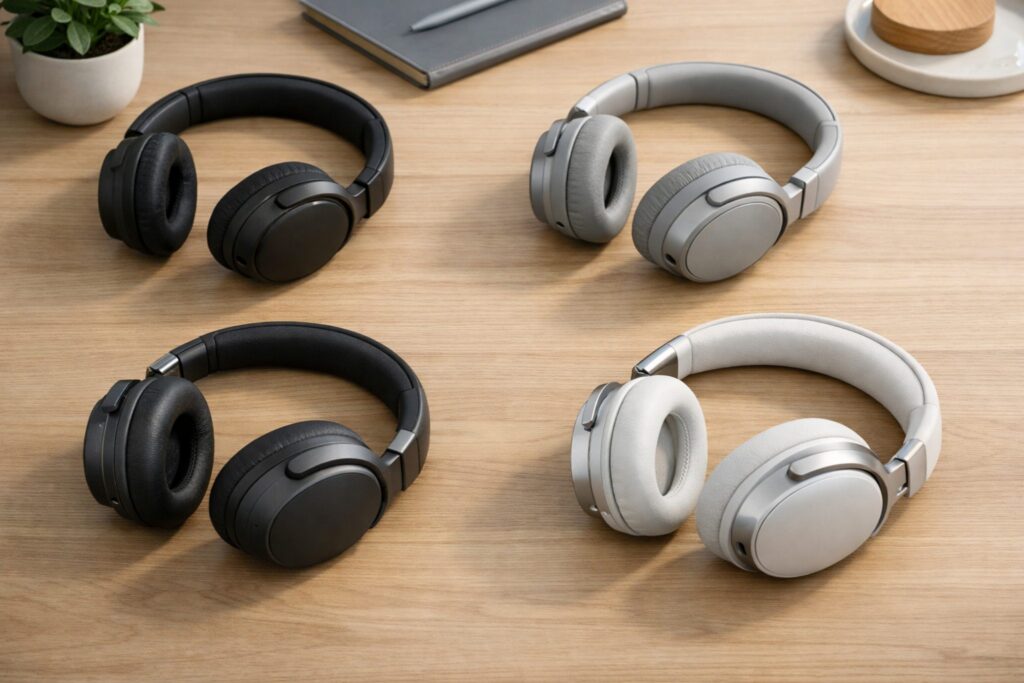
Wireless Headphones Buying Guide 2026
Wireless Headphones Buying Guide 2026: start with routine, not brand hype, and narrow the field by use case, platform, battery, and budget.
So the goal here is not to dump a list of popular models. It is to set the criteria first, narrow the shortlist second, and make the final decision feel tied to real ownership instead of hype.
Start with routine, not the logo on the box
The fastest way to buy the wrong headphone is to begin with brand reputation instead of weekly use. A buyer who mainly needs quiet commuting and occasional calls does not need the same product as someone who listens for hours at a desk or moves constantly between a phone, tablet, and laptop. The shortlist gets better much faster once the routine is clear.
That is why ANC should be judged as a daily-fatigue feature rather than as a one-time demo effect. Office murmur, café noise, and train rumble usually matter more than one flight, so routine environments deserve more weight than dramatic travel examples.
ANC matters, but it should not be your only filter
Noise cancelling is important, but comfort, transparency behavior, call quality, and charging rhythm all change long-term satisfaction. A headphone that sounds impressive for ten minutes can still be annoying after two weeks if the fit or charging routine is wrong.
The useful question is not the lab number, but how often the product interrupts your week. A battery advantage becomes meaningful when it changes your charging rhythm enough that the headphone feels easier to trust and easier to keep in rotation.
Battery life matters most when your routine is repetitive
Battery numbers are not just for flights. They are often more meaningful during ordinary work-and-commute weeks when charging becomes either invisible or annoying. Long battery life lowers the friction of ownership, especially for buyers who reach for the same headphone every day.
That is why battery life should be read as ownership friction, not just as a headline. The buyers who notice it most are usually the ones who wear the same pair through repeated weekday use rather than only on occasional trips.
Platform fit changes value more than many buyers expect
Apple users with a broader Apple stack may get more from AirPods Max 2, while Android users can get more from LDAC-equipped alternatives. Buyers who expect to change phones later may be better served by platform-neutral models.
The smarter platform choice is often the one that creates less friction over time. A headphone that feels merely acceptable today can become quietly annoying once you add a tablet, laptop, or future phone change into the routine.
Q. Is the most expensive model automatically the right one?
No. The right answer depends more on routine and priorities than on price alone. The smarter way to read value is to ask where the money turns into repeated satisfaction, not just where the spec sheet looks richer.
That is why ANC should be judged as a daily-fatigue feature rather than as a one-time demo effect. Office murmur, café noise, and train rumble usually matter more than one flight, so routine environments deserve more weight than dramatic travel examples.
Q. Should I rank ANC above battery?
Not always. Buyers who wear headphones all week often feel charging friction just as strongly as ANC differences.
Battery life matters because ownership is repetitive. The real difference shows up when commuting, desk use, and evening listening keep stacking up and one model still feels relaxed while another starts forcing you to think about the charger too often. The difference usually grows more obvious once normal weekly use starts piling up.
Q. Does platform fit really matter?
Yes. It can change whether premium features feel useful every day or stay mostly theoretical. This is really about the devices you rotate through, not just the phone you happen to use this week.
Platform fit usually becomes more obvious after a few weeks than on day one. What matters is not just whether the headphone connects, but whether switching devices, keeping app settings, and changing phones later still feels easy enough to keep the product pleasant.
- First-time category buyers who want a framework before reading individual reviews.
- Buyers who are still deciding whether budget, battery, ANC, or platform matters most.
- Readers who want to use the hub as a decision tree rather than a product dump.
- If you already narrowed the field to two specific models, go straight to the compare pages.
Common buying mistakes that create the wrong shortlist
A lot of buyers make wireless headphones harder to choose by solving the wrong problem first. They compare flagship noise cancelling models to style-led lifestyle pairs, or compare budget picks to premium ecosystem products, then wonder why the conclusion feels unclear. The cleaner approach is to narrow by routine first: commute, office, long listening, Apple-first convenience, Android flexibility, or price ceiling. Once the shortlist is built around that real routine, most of the false comparisons disappear.
Most buying mistakes happen because people compare different kinds of value with one shared yardstick. Once routine, platform, and budget are separated first, the shortlist usually gets smaller and more logical.
How to make the final decision feel less random
Imagine one ordinary week instead of one checkout moment. Will these headphones live on a train, at a desk, in an Apple ecosystem, in a mixed-device setup, or mainly in relaxed listening sessions at home? That weekly routine usually reveals whether you need stronger ANC, easier device switching, lighter weight, or better long-session comfort. Buyers who answer that honestly usually avoid paying for the wrong premium.
That is usually the point where the category becomes easier. Once you know where the headphones will live most of the time, a lot of impressive but irrelevant features stop pulling the shortlist in random directions.
![무선이어폰 예산별 추천 [2026] — 2만 원대부터 35만 원대까지](https://pyjdeals.com/wp-content/uploads/2026/03/earbuds-04-post-7813-7813-1024x682.jpg)