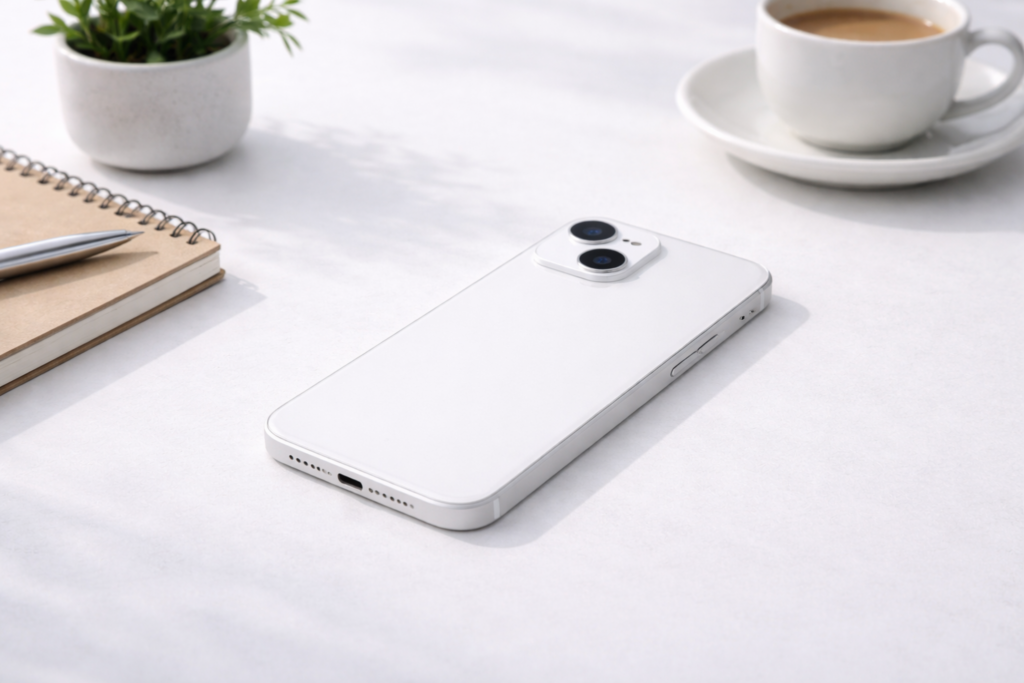
The iPhone 17e is not the 'cheap iPhone' in the dismissive sense. It is the entry point that matters most for buyers who want a modern iPhone experience without paying for hardware tiers they are unlikely to use.
| Starting price (US) | $599 |
|---|---|
| Chip | A19 |
| Display | 6.1-inch Super Retina XDR |
| Battery | Up to 26 hours video playback |
| Rear camera | 48MP Fusion camera |
| Storage | Starts at 256GB |
Quick take
Consider this model if its strengths match the routine you actually repeat every week.
Skip it if this article’s highlighted hardware advantages do not match the way you actually use a phone every day.
Its value is low-friction entry
The 17e works best when the goal is not to buy the most advanced iPhone but to start with the platform at a lower level of financial pressure.
Why it still feels enough
For everyday communication, casual photos, app use, and basic long-term reliability, an entry model can still satisfy more buyers than spec-heavy discussions suggest.
Battery and stability matter more than excitement here
This phone is not about chasing a thrill. It is about wanting a dependable iPhone starting point that does not feel reckless to buy.
Who should stretch to the standard iPhone 17
If you already know you care about camera upgrades, a more premium feel, or longer confidence before feeling limited, then the standard 17 may be the better long-term buy.
Practical checks before narrowing the shortlist
When reading iPhone 17e Review: The Simplest Way to Start with iPhone, it helps to look beyond the model name and headline specs. This review is most useful when the product is judged against the buyer’s real routine, not as a generic ranking entry.
The main decision points are battery life, camera habits, and storage. Those factors change how the same product feels in daily use, especially when the buyer already owns devices or accessories that pull them toward one ecosystem.
Where regrets usually come from
Most regrets do not come from a product being bad. They come from paying for strengths that do not match the routine. Checking carrier plan and long-term value before buying makes it easier to separate a genuinely useful upgrade from a spec that only looks impressive on paper.
How to compare similar options
If two options look close, decide first what you can give up without frustration. That usually reveals whether the higher model is justified or whether the safer purchase is the simpler one that fits the actual use case.
Decision checks before you narrow the shortlist
iPhone 17e Review: The Simplest Way to Start with iPhone should not be read as a generic review. The useful question is whether the product fits the routine that will repeat after the first week, especially around battery endurance, camera habits, and storage pressure.
That distinction matters for search quality as well as for buyers. A page is more useful when it explains who should skip an option, who should pay more, and where the trade-off becomes visible in daily use.
What to verify before buying
- Check whether battery endurance is a weekly need or only a nice-to-have spec.
- Decide whether camera habits changes the experience enough to justify the price gap.
- Factor in upgrade cycle, because long-term fit often matters more than launch excitement.
If those checks are clear, the recommendation becomes more defensible: the best choice is not always the most powerful model, but the one whose strengths match the buyer’s actual constraints.
Bottom line
The iPhone 17e is the right entry point when you want an iPhone without starting from a premium mindset.
What changes the value of iPhone 17e
The size angle changes the recommendation. The useful question for iPhone 17e is how well it handles two-year cost, camera habits, pocket comfort, battery rhythm, and storage needs after the first week, when novelty matters less. In this article, iPhone 17e is mainly about two-year cost, camera habits, pocket comfort, battery rhythm, and storage needs, not about repeating the same broad product-family advice.