Dyson Purifier Big+Quiet Formaldehyde BP03 Review
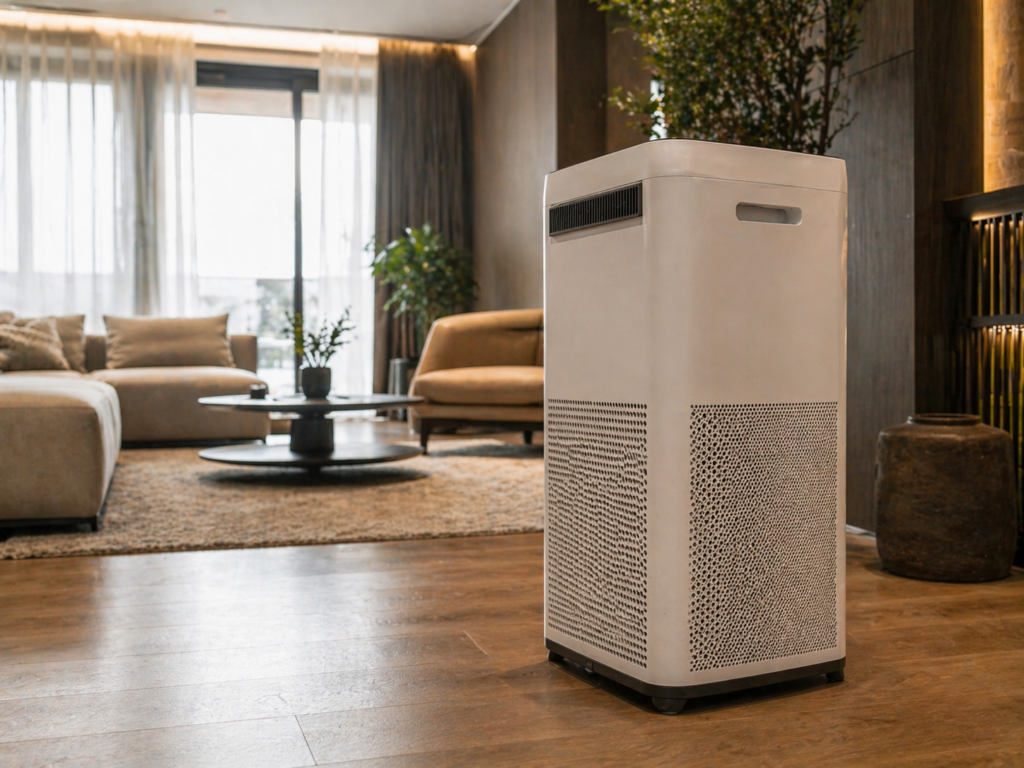
The Dyson Purifier Big+Quiet Formaldehyde BP03 only makes sense if the buyer’s problem is specific enough to justify the price. That is the clearest way to understand it. This is not a general “best air purifier” purchase. It is a premium large-space purifier built for buyers who care enough about formaldehyde, very large coverage, and long-cycle ownership logic to pay for a much narrower kind of reassurance.
Without that context, the BP03 is easy to overbuy. There are cheaper purifiers with much stronger mainstream value arguments. The Dyson becomes rational only when its premium traits match a premium concern. That is what separates an intelligent purchase from an expensive one.
Why formaldehyde is the only convincing first reason to look at it
The strongest case for the BP03 is not its design or even its size. It is formaldehyde. Buyers worried about newly built spaces, renovations, fresh furniture, or indoor air after home updates are not looking at the same market in the same way as ordinary purifier buyers. That is where Dyson’s positioning becomes more understandable.
Without that problem in the room, the product starts to look much harder to defend. Formaldehyde is not a nice extra here. It is the central justification.
The large-space story is real, but it is not enough by itself
The BP03 does offer meaningful large-space capability, and that matters. Buyers with very open rooms, studio-style workspaces, or broad common areas may find the size argument appealing. But large coverage alone is not what makes the product worth almost a thousand dollars. Many buyers can get practical large-room support for much less.
That is why room size should be read as part of the case, not as the whole case. The premium works when coverage and formaldehyde concern arrive together. Coverage by itself does not fully rescue the price.
Its long-cycle filter story is attractive, but still not magic
Dyson deserves real credit for making the long-cycle ownership story part of the product’s value. A permanent catalytic formaldehyde filter and a long HEPA replacement interval are not meaningless talking points. They matter for buyers who hate the feeling of constantly feeding a machine expensive consumables.
Still, the word “permanent” can mislead buyers if they are not careful. The formaldehyde component is permanent, but not every filter-related cost disappears. This is a more favorable ownership structure than many premium buyers expect, but it is not free ownership dressed up as engineering.
The sensor package is impressive, but not everyone should pay for it
The BP03 offers the kind of sensor stack that naturally attracts premium-minded buyers. CO2, formaldehyde, VOC and other readings make the purifier feel more aware and more serious than mainstream models. For some people, that visibility genuinely helps. It can make the product feel like an air-quality instrument rather than a simple appliance.
But that is still a niche benefit. Many households do not need to pay Dyson-level money just to see more data about a problem they would have managed just fine with a lower-priced purifier.
Where the value case starts to weaken fast
The BP03 becomes much harder to defend when the buyer is mostly looking for ordinary dust control, general large-room coverage, or a purifier that simply feels premium. In those cases, the product can feel less like a solution and more like an expensive overcorrection. In those cases, Levoit and Blueair begin to look much more sensible. The Dyson is too expensive to carry itself on polish alone.
This is the point many buyers should be most careful about. It is easy to admire the product and still not need it. Admiration is not the same thing as fit.
What comparison reveals about its real position
The BP03 becomes clearest when compared with the Levoit Core 600S and the Blueair 311i Max. Against Levoit, Dyson looks like the premium specialist, not the value answer. Against Blueair, Dyson looks like the niche technical luxury option, not the easy large-room comfort choice. These comparisons reveal that the Dyson is not really trying to compete in the middle. It is asking buyers to accept a narrower, higher-priced reason to care.
That is why “best” language is so unhelpful here. The BP03 is not broadly best. It is specifically justified, or it is too much.
Who should actually take it seriously, and who should not
The BP03 is for buyers with a real formaldehyde concern, buyers who want a large-space premium machine with a strong sensor story, and buyers who are comfortable paying for very specific reassurance rather than mainstream value. It is also easier to justify in more expensive homes where renovation or furnishing cost makes the purifier feel proportionate rather than excessive.
Most other buyers should probably move on faster than they first expect. If your problem is normal dust, pet routines, everyday odor, or standard living-room coverage, you can usually spend much less and still feel very well served.
Who will still feel the purchase was worth it
The buyers most likely to defend the BP03 later are the ones who had a premium air-quality concern before they bought it. If formaldehyde anxiety, room scale, and sensor visibility all mattered before purchase, the Dyson remains coherent after purchase. If those things only sounded nice in the moment, regret becomes much more likely.
This is the fairest way to judge this model. It is not overpriced because it is bad. It is overpriced for any buyer whose problem is too ordinary for what it is trying to solve.
What to read before you decide