Blueair Blue Pure 311i Max Review
The Blueair Blue Pure 311i Max makes sense for buyers who are tired of choosing between quietness and room coverage. That is the product’s clearest identity. It is not the cheapest purifier in the category, and it is not the most direct pet-odor recommendation. What it offers instead is a calmer kind of large-room ownership, one that feels easier to live with over long hours.
That is also why the Blueair has a slightly different appeal from Levoit. Levoit often wins by feeling practical and feature-complete for the money. Blueair wins by feeling lighter, quieter, and more design-comfort-driven. Buyers who know that quietness changes everything in daily use tend to understand this model very quickly.
Why quiet large-room performance is its main reason to exist
There are many purifiers that can claim respectable room coverage. Fewer feel intentionally built around being easy to live with in larger spaces. That is where the 311i Max stands out. It is compelling because it lets buyers chase large-room support without automatically accepting a loud, heavy presence in the room.
This matters most for living rooms near sleeping areas, homes with sound-sensitive routines, and buyers who expect to keep the purifier on almost all the time. In those contexts, quietness stops being a bonus and becomes part of the product’s basic value.
The energy profile makes ownership feel lighter than many buyers expect
The Blueair 311i Max also earns trust by being easy to run. Its power draw stays appealing for a machine with this kind of room ambition, and that changes how buyers think about daily use. A purifier that feels inexpensive to keep on tends to become part of the room more naturally than one you feel tempted to ration.
That does not automatically make it the cheapest total-cost answer, but it does make it feel more graceful to own. Some products win with brute value. Blueair wins partly by lowering friction.
The design matters here more than buyers like to admit
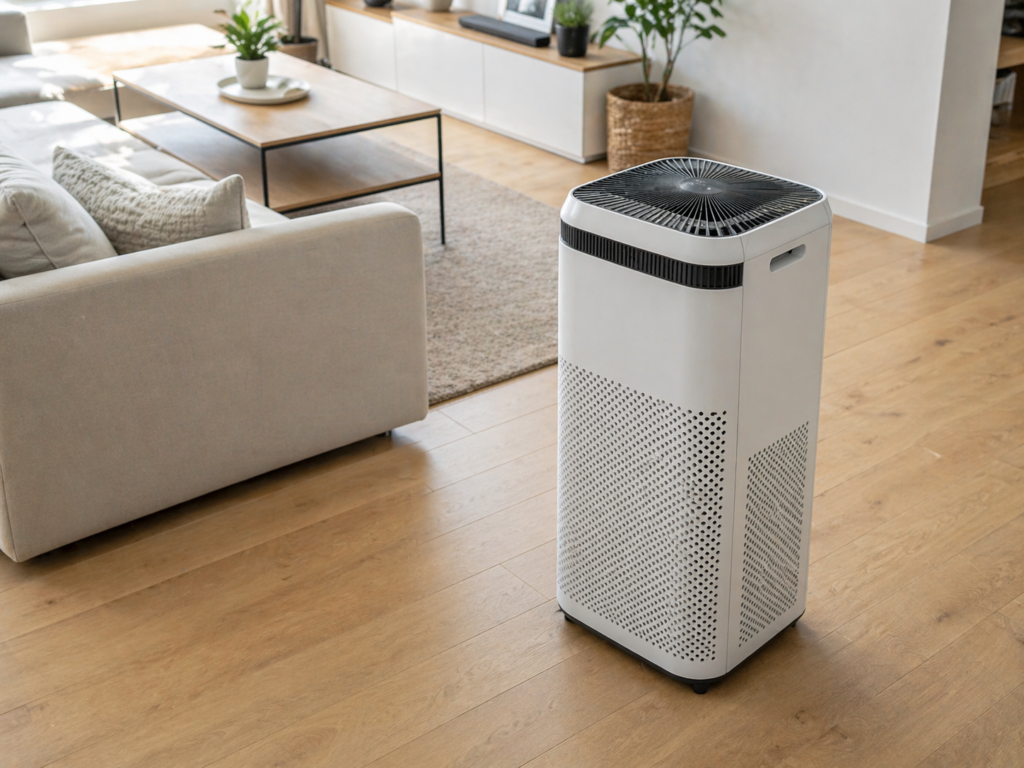
Blueair’s design story is not superficial in this model. The washable pre-filter colors, softer visual presence, and less appliance-like feel all change how the product fits into a room. That matters because air purifiers are not hidden tools. They are visible roommates. A purifier that feels easier to place often gets tolerated more generously in daily life.
This does not mean design should outrank performance. It means buyers should be honest that room presence is part of ownership. Blueair knows that and builds around it more deliberately than many competitors do.
Why the non-switchable ionizer matters more than the product would like
The Blueair 311i Max would be easier to recommend broadly if the ionizer could simply be turned off. Because it cannot, that limitation becomes part of the buying decision in a real way. Many buyers will not care. Some buyers will care immediately and reject the purifier without hesitation. That makes it a genuine dividing line, not a footnote.
This is especially important for buyers who are very sensitive about ozone-related questions, even when the product still fits certification standards. The inability to opt out removes flexibility, and flexibility matters in premium-leaning recommendations.
Odor-heavy buyers may find the product a little less convincing
The Blueair is easier to like if your main goal is clean, quiet air in a larger space. It becomes less automatically persuasive if odor is the central concern. Its carbon approach does not hit the same way as Levoit’s more directly pet- and smell-conscious framing. That does not make Blueair weak. It just means it is not the obvious odor-first machine in this lineup.
That difference matters because some buyers confuse room comfort with smell control. Blueair excels more at the first than the second. The Levoit models often reverse that emphasis.
What comparison reveals about its real place in the market
The 311i Max becomes clearest when compared with the Levoit Core 600S. That comparison shows exactly where Blueair belongs. The Levoit is the stronger value-and-coverage argument. The Blueair is the quieter, lighter, more room-friendly answer. They are both good, but they satisfy different priorities.
Against Dyson, Blueair looks far more grounded financially while still offering a polished ownership feel. Against Coway, it is clearly the more design- and comfort-oriented machine. That set of comparisons gives the product its true identity.
Who this purifier fits best, and who should keep moving
The Blueair 311i Max fits buyers who care strongly about quietness, large-room calm, and design that does not make the purifier feel like a punishment in the room. It is especially attractive for buyers who expect to run the unit often and want the ownership experience to feel light rather than aggressive.
Buyers who care most about pet smell, buyers who want to disable ionization, or buyers who want the strongest possible large-room value may find themselves leaning elsewhere fairly quickly. For them, Levoit often remains the more direct answer.
Who will still like this purchase later
The buyers most likely to stay happy with the Blueair are the ones who notice environmental stress more than spec-sheet excitement. If the purifier being quiet, visually tolerable, and easy to keep running matters to you every day, the 311i Max can feel like one of the more emotionally comfortable purchases in the category.
That remains the product’s best argument. It does not just filter air. It asks less from you while it does it. But that argument weakens quickly if the buyer needs harder odor reassurance or wants to avoid the ionizer issue entirely. For the right buyer, that is worth a lot.
What to read before you decide