
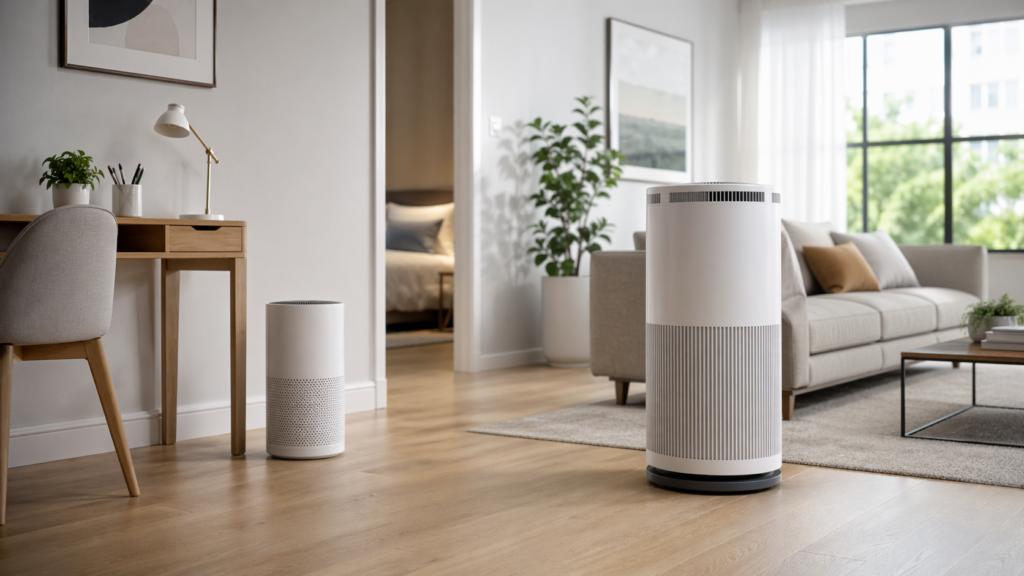
Air Purifier Buying Guide
Most air purifiers look similar once you are staring at spec sheets, but the buying split is usually simpler than it seems. The real question is whether you need an affordable all-rounder for a bedroom, a smart mid-size model for pets and daily odor control, a quiet large-room machine, or a premium unit built around a very specific problem like formaldehyde.
That is why this guide starts with decision pressure, not with brand history or raw specs. If you sort your choice by room size, filter cost, noise, smart features, and the kind of air problem you actually care about, options like the Coway AP-1512HH Mighty, Levoit Core 400S, Levoit Core 600S, Blueair Blue Pure 311i Max, and Dyson Purifier Big+Quiet Formaldehyde BP03 stop looking interchangeable very quickly.
Why room size matters before brand preference
Air purifiers fail more often because buyers choose the wrong size class than because they choose the wrong brand. A solid bedroom unit can feel disappointing in an open living room, while a large-room machine can feel expensive and unnecessary if it sits beside a bed or desk all day. The category makes more sense once you separate small-room, medium-room, and large-room use first.
That is where the lineup starts to divide. The Coway AP-1512HH Mighty makes sense as an entry all-rounder for smaller rooms. The Levoit Core 400S fits buyers who want smart control and pet-friendly odor support in a mid-size space. The Core 600S and Blueair 311i Max make more sense once you start thinking about larger living rooms or open-plan spaces. The Dyson BP03 belongs in a different conversation altogether because it is a premium large-space unit with a very specific air-quality angle.
If you get that first decision right, everything else becomes easier. If you get it wrong, even a highly rated purifier can feel underwhelming or unnecessarily expensive.
Why ownership cost matters more than the sticker price
Air purifiers are not one-time purchases in the way many buyers imagine. The machine is only part of the cost. Filters, electricity, and replacement intervals shape satisfaction over time, especially if you plan to run the purifier every day. A model that looks affordable on day one can feel more expensive after a year if its filter bill keeps climbing.
That is why the Coway AP-1512HH still matters so much: it stays attractive because it keeps ownership simple and relatively affordable. The Levoit Core 400S is still reasonable, but its ongoing filter cost becomes part of the story. The Core 600S becomes more convincing when you price it against how much room it can handle. The Dyson BP03 only starts to make sense if you care enough about its formaldehyde focus and very long HEPA interval to justify the premium.
Buyers who ignore long-term cost often end up paying for features they do not actually use. Buyers who account for ownership cost from the start usually make calmer, more durable decisions.
Noise is not a side detail if you will live next to the machine
For bedroom use, office use, and nursery use, noise is often more important than buyers expect. A purifier that looks excellent in performance charts can become annoying if its high-speed mode feels harsh or if its everyday auto behavior is more noticeable than you want. Air purifiers are long-presence products, so small annoyances add up.
That helps explain why Blueair has such a clear place in the market. The Blue Pure 311i Max is compelling because quiet large-room performance is rare at its price. The Coway Mighty also earns its reputation partly because it remains easy to live with. The Core 600S is strong for value and coverage, but its higher-speed noise matters more in bedrooms than it does in a large living area.
Noise is not a cosmetic factor. It changes where you place the purifier, how often you run it, and whether you stay happy with it after the first week.
Smart features only matter if they actually change your routine
Some buyers genuinely benefit from app control, air-quality history, voice assistant support, and remote scheduling. Others barely use those features after setup day. Smart features are not meaningless, but they are easy to overpay for if they do not fit your habits. That is why Levoit and Blueair often appeal to different buyers even when both look modern and connected.
The Levoit Core 400S is a strong example of smart features that actually help a mainstream buyer. The app is easy to understand, voice assistant support is familiar, and the package still sits in a fairly accessible price range. Blueair offers smart control too, but its appeal is more about quietness and design than about feature quantity. Coway’s classic Mighty, by contrast, still makes sense precisely because it does not force smart features into the buying equation.
If you already live inside a smart-home routine, connected purifiers can feel natural. If you do not, the best purifier may be the one that simply works without asking for more attention.
Pet homes, wildfire regions, and new-home worries do not point to the same purifier
Different air problems lead to different winners. Pet households usually care about dander, everyday dust, and odor support. That is why the Levoit Core 400S keeps showing up: it is a smart mid-price pick with a meaningful carbon-pellet angle and strong pet-household reputation. Larger pet-heavy homes may justify the Core 600S instead.
Wildfire-prone areas and smoke-sensitive buyers may lean toward Levoit because of its filter options and large-space practicality, while quiet-sensitive buyers may move toward Blueair. Buyers worried about formaldehyde from new furniture, renovations, or freshly built spaces end up in a different category, and that is exactly where the Dyson BP03 starts to make sense. It is not the default recommendation, but it becomes far more relevant when formaldehyde is the problem you are actually trying to solve.
The mistake is assuming one purifier handles every kind of problem equally well. Most of the time, the right purchase depends on which discomfort you are trying hardest to remove from daily life.
What kind of buyer each part of the market fits best
If you want the safest low-cost starting point, Coway remains one of the easiest recommendations. If you want a mid-priced smart purifier that feels current and pet-aware, the Levoit Core 400S earns its place quickly. If your living room is bigger and you want value before luxury, the Core 600S becomes a stronger answer.
If quietness and tasteful design matter more than raw smart-home appeal, Blueair becomes more attractive. If your problem is specifically large-space premium coverage and formaldehyde anxiety, the Dyson BP03 becomes a specialist answer rather than a general one. The key is recognizing that these products are not trying to win in the same way.
That is also why rankings can mislead buyers. A purifier can be excellent and still be wrong for your room, your budget, or your air problem.
The last questions worth asking before you buy
Before you buy, ask three questions. First, is this purifier sized for the room where it will actually spend most of its life? Second, are you comfortable with its filter and electricity costs over time, not just on day one? Third, are you paying for features you will really use, or for features that merely sound reassuring now?
Once those answers are clear, the category becomes much easier to navigate. Air purifiers are not hard to understand because the products are mysterious. They are hard to buy because buyers often start with the wrong question. Start with tension, not branding, and the right shortlist usually appears fast.
What to read before you decide
![무선이어폰 예산별 추천 [2026] — 2만 원대부터 35만 원대까지](https://pyjdeals.com/wp-content/uploads/2026/03/earbuds-04-post-7813-7813-1024x682.jpg)